
Sir Anthony Caro (1924 - 2013) played a pivotal role in the development of twentieth century sculpture. After studying sculpture at the Royal Academy Schools in London, he became an assistant to Henry Moore. He came to public attention with a show at the Whitechapel Gallery in 1963, where he exhibited large abstract sculptures brightly painted and standing directly on the ground so that they engaged with the spectator on a one-to-one basis. This was an entirely new way that sculpture was seen in, and led the way in the direction of three-dimensional art.
?His teaching at St Martin’s School of Art in London (1953 -1981) was very influential. His questioning approach opened up new possibilities, both formally and with regard to subject matter. His innovative work as well as his teaching led to a flowering and a new confidence in sculpture worldwide.
Caro often worked in steel, but also in a diverse range of other materials, including bronze, silver, lead, stoneware, wood and paper. Major exhibitions include retrospectives at the Museum of Modern Art, New York (1975), the Trajan Markets, Rome (1992), the Museum of Contemporary Art, Tokyo (1995), Tate Britain, London (2005), and three museums in Pas-de-Calais, France (2008), to accompany the opening of his Chapel of Light at Bourbourg. He has been awarded many prizes, including the Praemium Imperiale for Sculpture in Tokyo in 1992 and the Lifetime Achievement Award for Sculpture in 1997. He holds many honorary degrees from universities in the UK, USA and Europe. He was knighted in 1987 and received the Order of Merit in May 2000.
Sir Anthony Caro OBE
-
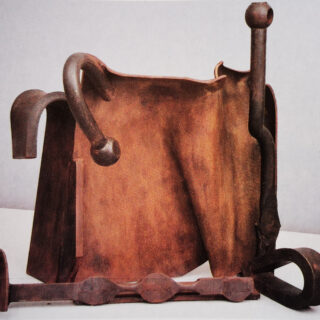
Sir Anthony Caro OBE
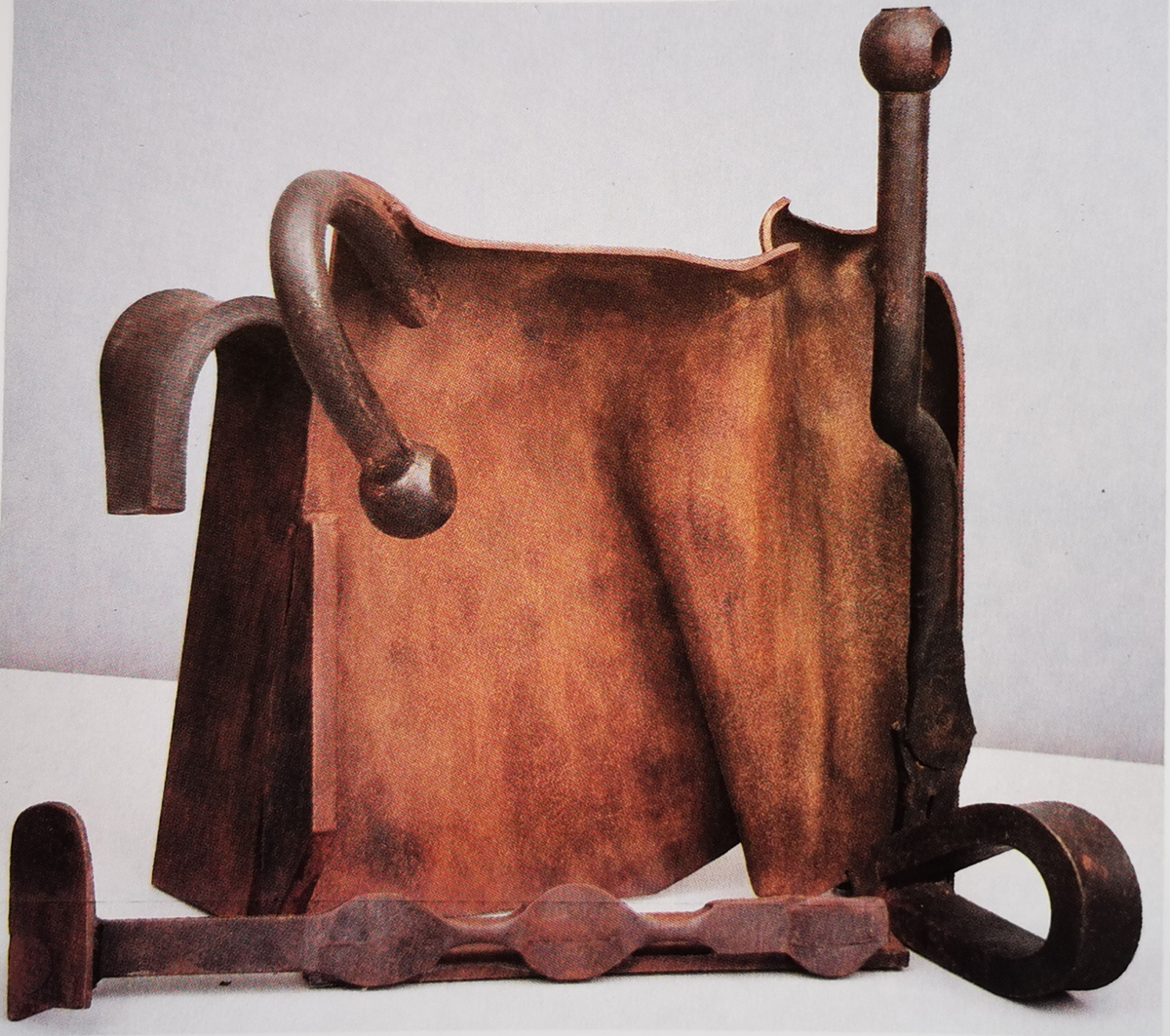
Fee Fo Fum, 1988-89
Sold
Please contact the gallery to discuss available works by this artist.